Grand Houses or Family Growers: Choosing Your Paris Champagne Day
This guide decides one thing: who pours your champagne. A big house gives you the famous name, the deep chalk cellars and a polished visit. A family grower gives you the person who tends the vines. Most of the best champagne tours from paris mix the two, and a few commit to one side. Here is how to choose.
What is a champagne house?
A house is a négociant-manipulant, NM on the label. It buys grapes, musts or wines to add to its own and makes the champagne on its premises. The Comité Champagne counted 410 houses in 2025, and they shipped 191.9 million of the region's 266.1 million bottles.
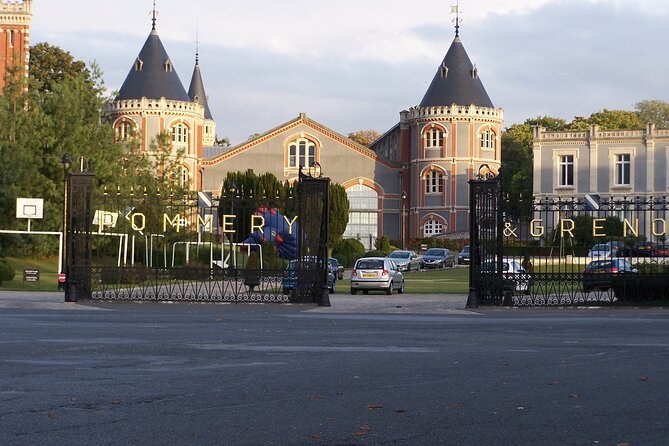
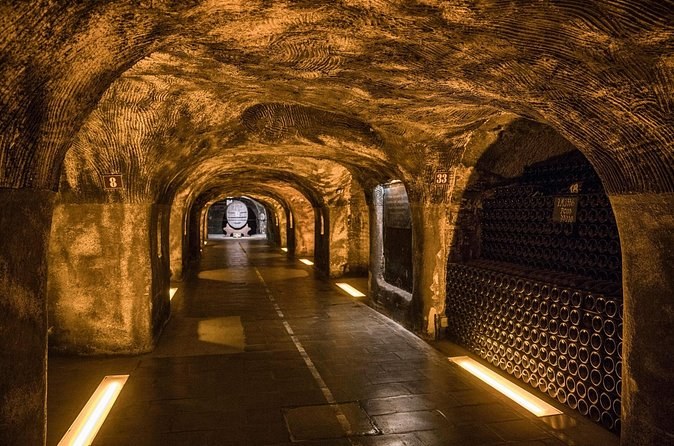
The names you know are houses: Moët & Chandon in Épernay; Veuve Clicquot, Pommery, Mumm, Ruinart, Lanson and Taittinger in Reims. Their cellars are the famous ones. About 25 km of galleries run beneath the Saint-Nicaise hill in Reims, and 110 km beneath the Avenue de Champagne in Épernay.
What is a grower, and what does RM on the label mean?
A grower owns vines. In 2025 the region counted 16,460 of them. Some sell their grapes to the houses, and others belong to a cooperative. The ones you visit on a tour make their own wine.
A récoltant-manipulant, RM on the label, makes champagne only from its own vineyards. That is the family estate the tours mean by "a grower": one family, its own slopes, its own cellar. A récoltant-coopérateur, RC, hands its grapes to a cooperative and takes back the wine to sell under its own name.
Where do cooperatives fit?
Between the two. A cooperative presses and makes wine for its grower members, and cooperatives and growers together shipped 74.2 million bottles in 2025. The region has 120 of them.
You will meet one on some days. My Winedays' day pairs its famous house with two family vineyards, or with a cooperative and a family vineyard. If a cooperative matters to you, ask when you book which it will be on your date.
What happens on a house visit?
You go down into the cellars with the house's own guide, often in a group with other visitors. You walk the chalk galleries, see the bottles resting and learn how the house makes its wine. Then you taste. It takes an hour to two hours.
The cellars stay at 10 to 12 °C all year, so bring a layer. On their own sites the houses charge from €20 at Nicolas Feuillatte for one glass to €90 at Ruinart. Moët & Chandon's visit costs €48 for 90 minutes, and Veuve Clicquot's €36 for an hour. On a tour the fare usually covers it.
What happens at a grower's?
Something smaller and closer. You visit a family winery in a village among the vines, see the cellar where the wine is kept, and taste with the family or its guide. On the Reims afternoon each grower gets an hour and a half, and you taste six glasses across the two.
Blue Fox promises a personal welcome at its family winery, Champagne DOMI. France Intense's growers' day ends at Champagne Roger-Constant Lemaire. You meet the people, and you taste wine from the family's own vines.
Can you do both in one day?
Yes, and it is the most common shape of the day. My Winedays' day from Paris visits one famous house and two family vineyards, with lunch between. Blue Fox pairs Nicolas Feuillatte with a family winery. Champagne Tasting Tours visits a small grower and one larger producer.
Privately, Le Tour de Vigne pairs Moët & Chandon with an independent producer at Châtillon-sur-Marne. Parismatic pairs Vranken-Pommery with the grower Michel Fagot. If this is your first visit, a day with both lets you taste the difference for yourself.
Which days visit only the big houses?
Galaxytour's private day is the clearest: Moët & Chandon and Veuve Clicquot, both paid in the fare, with a house guide in each cellar. Its Moët & Chandon day does the same with one house. The minivan day spends its cellar time at Vranken-Pommery, after two and a half hours in the Verzenay vineyards.
The Go Go Tours cathedral day visits "a renowned house", assigned on the day. Several shared days name a big house only "subject to availability", and Veuve Clicquot closed for the winter from 28 December 2025 to 7 April 2026. If one name matters to you, book the day that puts it in the fare.
Which days visit only growers?
All of them start in Reims. The Reims afternoon visits two family wineries in four and a half hours, for $152. France Intense's day visits three family wineries with nine tastings and lunch, and Sparkling Tour's does the same with a two-course lunch.
Sparkling Tour says it plainly: Moët & Chandon, Veuve Clicquot and Ruinart are not on its day. Its private version adds a third course and a tenth champagne. From Paris, you reach all of these by the TGV to Reims, 45 minutes from Gare de l'Est.
Which is better for a first visit?
A day with both. You see the scale of a house's chalk cellars and hear its history. Then you meet a family making champagne from its own vines, and taste the difference side by side.
If you have only one day and one wish, let the wish decide. Want Moët & Chandon's cellars? Book the day that pays for them. Want to talk to the person who made the wine? Go to a grower.
Which is better if you already know champagne?
The growers, usually. You know the house styles already, and a grower's wine comes from one family's own vines and its own choices. On a growers' day you taste nine or ten wines from three estates, and you can ask what you like.
The exception is a house you have always wanted to see. Ruinart's crayères and Taittinger's cellars under the old Saint-Nicaise abbey are worth a morning on their own. Pair that with a growers' afternoon.
Houses, growers or both: the days side by side
These are the days that commit to one answer, and a few that mix them. Fares are the starting price in US dollars.
| Operator | Who pours | Named producers | Tastings | Lunch | Fare from |
|---|---|---|---|---|---|
| Galaxytour | Houses only | Moët & Chandon, Veuve Clicquot | Two cellar tastings | Yours | $696 per person |
| Galaxytour | Houses only | Moët & Chandon | One cellar tasting | Yours | $550 per person |
| Go Go Tours | Houses only | A renowned house, on the day | At the house | In the fare | $408 per person |
| Paris Champagne Tour | Houses only | Vranken-Pommery | At least 4 glasses | In the fare | $275 per person |
| My Winedays | Both | A famous house, on the day | At least 8 | In the fare | $372 per person |
| Blue Fox Travel | Both | Nicolas Feuillatte, DOMI | 6 | Yours | $269 per person |
| Champagne Tasting Tours from Paris | Both | Lanson on the route, by availability | At each producer | Yours | $443 per person |
| Le Tour de Vigne | Both | Moët & Chandon, a Châtillon grower | At each producer | Yours | $1,006 per person |
| À La Française | Growers only | Two family wineries | 6 glasses | Yours | $152 per person |
| France Intense | Growers only | Roger-Constant Lemaire and two more | 9 | In the fare | $286 per person |
| Sparkling Tour | Growers only | Three family growers | 9 | In the fare | $280 per person |
Every day in this table refunds in full if you cancel 24 hours ahead. The champagne houses and growers page has each house's own visit, price and season.
Frequently asked questions
What is the difference between a champagne house and a grower?
How can I tell a grower's champagne from a house's?
Which day tours visit both a house and a grower?
Is there a growers-only day from Paris?
Will I visit Moët & Chandon or Veuve Clicquot?
Do the big houses sell cheaper bottles than growers?
How many tastings will I get?
Where these facts come from
The definitions and figures are the Comité Champagne's; the visit prices are each house's own.
- Comité Champagne: frequently asked questions
- Comité Champagne: Champagne at a glance
- Comité Champagne: Champagne and World Heritage
- Moët & Chandon: visit us
- Veuve Clicquot: visit us
- Ruinart: visit of the crayères
- Nicolas Feuillatte: visit our cellars in Chouilly
- Taittinger: experiences
Days that answer the question
Epernay and Reims Champagne Private Day Trip from Paris
A private car from a fixed Paris pickup point to Moët & Chandon and Veuve Clicquot, both visits in the fare, with Hautvillers and Reims Cathedral on the way. Lunch is yours.
From $696 per person
Check Availability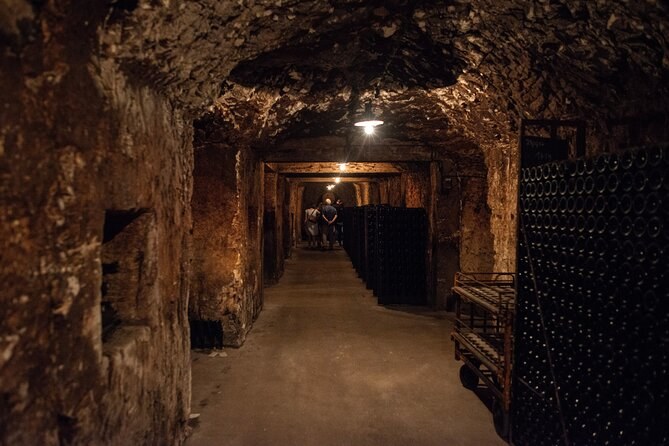
Reims afternoon tour Champagne and family growers
Meets at the Reims station tourist office at 2 pm: two family wineries, six glasses and Hautvillers, back at the station by 6:30 pm. The train from Paris is yours.
From $152 per person
Check Availability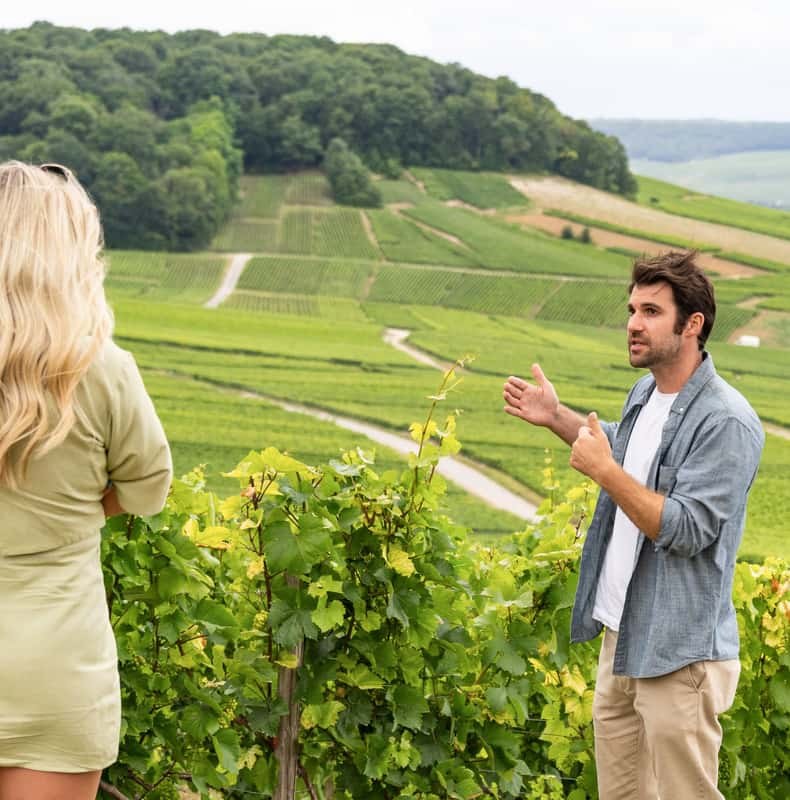
Champagne Day Trip from Paris with 8 Tastings & Lunch
Hotel pickup in Paris, one famous house and two family vineyards or a cooperative, at least eight tastings and a lunch paired with three champagnes, for up to eight.
From $372 per person
Check AvailabilityNext: decide who you want pouring, then compare every day on Paris Champagne Tours.