The Paris Champagne Route Village by Village: Hautvillers, Aÿ and Verzenay
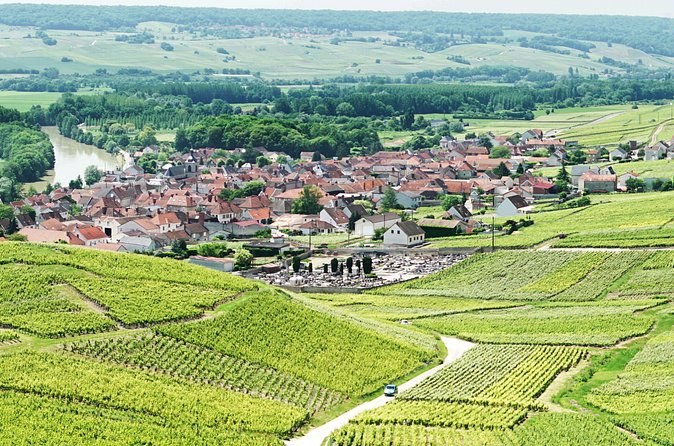
The short answer. Most champagne days run the same way: Reims, a first producer, Hautvillers, Épernay and a last producer. Hautvillers is the village almost every tour stops in, for Dom Pérignon's tomb. Aÿ's hillsides are on the UNESCO list, and Verzenay has a lighthouse in the vines. The rest of the route is the growers' villages, chosen for who pours.
Champagne is 319 villages, not one place. Seventeen of them are rated grand cru and 42 premier cru, and they sit in four growing areas, each with its own grape. You will not see them all in a day, and you do not need to. The villages below are the ones the tours from Paris and Reims stop in, in the order a day usually meets them.
The four growing areas, and the grape each one favours
| Area | Villages | Vines | Main grape |
|---|---|---|---|
| Montagne de Reims | 94 | 7,966 ha | Pinot Noir, 41% |
| Vallée de la Marne | 103 | 12,150 ha | Meunier, 59% |
| Côte des Blancs | 58 | 6,304 ha | Chardonnay, 85% |
| Côte des Bar | 64 | 7,898 ha | Pinot Noir, 84% |
Figures from the Union des Maisons de Champagne. The grape tells you what you taste: a Blanc de Blancs is Chardonnay only, and a Blanc de Noirs is made from the black grapes. The Côte des Blancs is 85% Chardonnay, the grape of a Blanc de Blancs. No day tour from Paris or Reims that we list goes as far as the Côte des Bar.
Hautvillers: the village every tour stops in
If your day has one village stop, it is this one. Saint Nivard founded the Benedictine abbey of Saint-Pierre here in about 650. In 1668 a monk of 29 arrived called Dom Pierre Pérignon, and he ran the abbey's cellars and estates for 47 years, until he died in 1715. His tomb is in the church of Saint-Sindulphe, the abbey church, and that is what the tours stop to see.
The abbey buildings are a different matter. Moët & Chandon has owned them since 1823, and they are private: you cannot go in. What you get is the church, the village streets and the view down over the vines. Tours give it anything from 15 minutes to nearly an hour. The private Moët & Chandon and Veuve Clicquot day spends 45 minutes there.
Aÿ and Mareuil-sur-Aÿ: the hillsides UNESCO listed
When UNESCO inscribed Champagne in 2015, it named three places, and one was "the historic vineyards of Hautvillers, Aÿ and Mareuil-sur-Aÿ". These are the slopes you look down on from Hautvillers. Nearly 10 km of cellars run beneath them.
In Aÿ, the sommelier's day from Paris visits Pressoria, a museum of the pressing, for two hours. Its listing calls Aÿ a grand cru village. You will see the name on labels too, as Aÿ-Champagne.
Épernay and the Avenue de Champagne
Épernay is a town, but most routes pass down its main street. The Avenue de Champagne is 1.5 km long, with 110 km of cellars underneath it, and Moët & Chandon stands at number 18. Tours stop here for 10 minutes to an hour and a half, often for lunch. The Musée du Vin de Champagne, in the Château Perrier on the avenue, costs €10 and is free for under-13s. Épernay and the Avenue de Champagne covers the houses on it.
Verzenay: a lighthouse in the vines
On the Montagne de Reims, Verzenay has a lighthouse nowhere near the sea. The Phare de Verzenay has 101 steps to a 360° view over the vineyards, with a museum of the vine beside it. The tower costs €3, the museum €8, or €9 for both. It opens daily until 30 September 2026, and from 4 November the tower and garden close for works while the museum stays open.
The minivan day from Paris gives two and a half hours to the Verzenay vineyards. Things to do in Champagne has the lighthouse in more detail.
The growers' villages on the way
Most of the rest of the route is villages you may not have heard of. They are where the family growers live, and a tour takes you there because of who pours, not what you see.
- Rilly-la-Montagne, on the Montagne de Reims: an hour and a half on the nine-tasting day from Reims.
- Chouilly: Nicolas Feuillatte's cellars, with a visit and one glass for €20.
- Damery: an hour and a half on a private day from your Paris hotel.
- Châtillon-sur-Marne and Villers-sous-Châtillon: an independent producer and a family estate.
Growers print RM on their labels. Houses and growers explains the codes, and which days visit growers only.
Things most visitors walk past
- The church's real name. Tours say "the abbey"; the door you go through is Saint-Sindulphe's.
- The museum beside the lighthouse. Verzenay's Musée de la Vigne explains the year in the vineyard you have just driven through.
- Le 19 on the avenue. A bar and shop pouring from 100 cuvées made by growers and cooperatives.
- The only cooperative on the avenue. Esterlin, founded at Mancy in 1948, sits among the houses.
- De Castellane's tower. It stands 66 m tall, and the house keeps a room of 7,000 label drawers.
The order a day usually runs
- Reims in the morning, for the cathedral.
- A first producer, a house or a grower, with a cellar visit.
- Hautvillers, for the church, the view and a walk.
- Épernay for lunch and the avenue.
- A last producer, and the drive back.
That is the order of the Reims-start days that end on the avenue. Every tour cuts it down to what fits, and that is the thing to compare. The planning post sets out the time each kind of day leaves you, and when to visit tells you when the vines are in leaf.
Photographs on the route
The best pictures are outdoors: the slopes above Hautvillers, the rows around Verzenay, and the lighthouse itself. Cellars are dim, and the houses set their own rules on cameras, so ask your guide before you shoot underground. Late afternoon light suits the vineyards, which is when the Reims afternoon tour is out among them.
Days that take in the villages
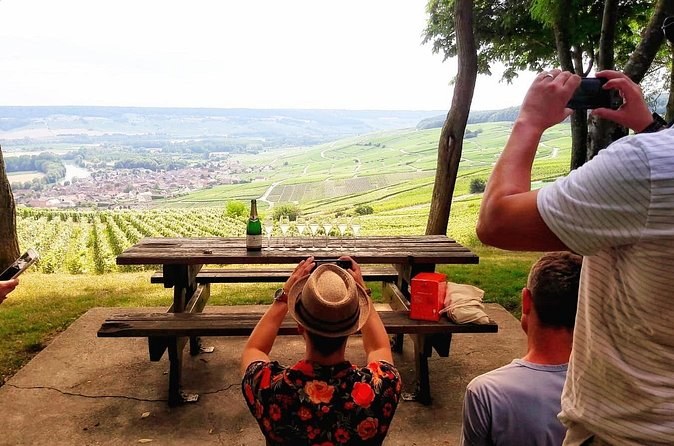
Exclusive Champagne Cellars & Dom Perignon Vineyards tour - Reims
Meets at 9:30 by Reims Cathedral's left gate: two estates, Hautvillers and the hillsides, ending about 5 pm on the Avenue de Champagne in Épernay. Lunch is yours.
From $245 per person
Check Availability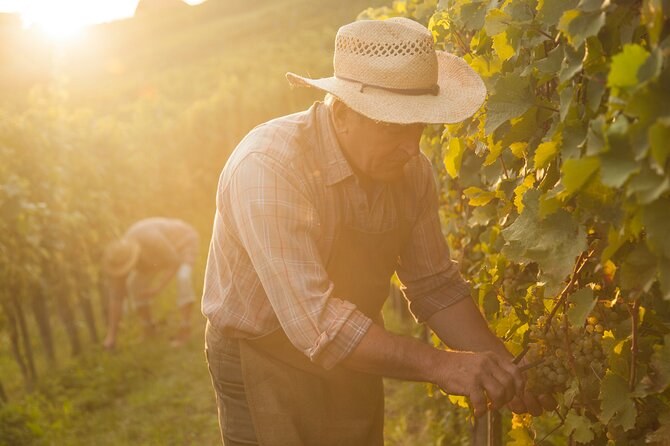
Private tour of the Champagne area, meet local producers and taste their Champagne, start from your hotel in Paris.
A private driver and guide from your Paris hotel to local producers, with Hautvillers, Damery and the Avenue de Champagne on the route. Lunch is yours.
From $1,118 per person
Check Availability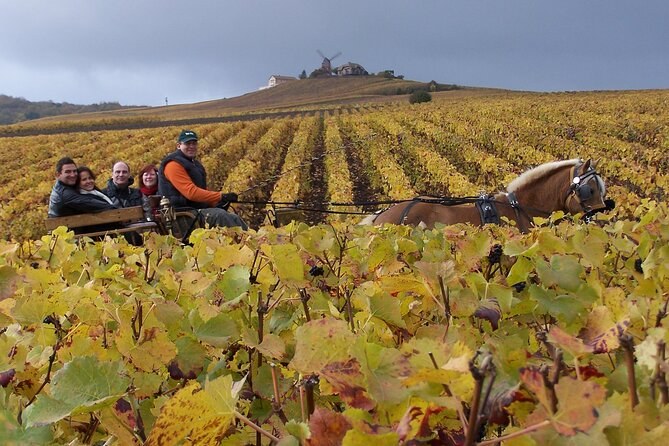
Full Day All-inclusive Tour in Champagne from Paris in a Minivan
Two and a half hours in the Verzenay vineyards, then Reims, its cathedral and the Vranken-Pommery cellars, with breakfast and lunch in the fare, up to 7 guests.
From $275 per person
Check AvailabilityNext: pick the villages by the grape you want to taste, then book the day that stops there. Every fare sits side by side on Paris Champagne Tours.